Divorce and mortgage: what solutions are available to resolve the situation of the family home?

15.05.2026
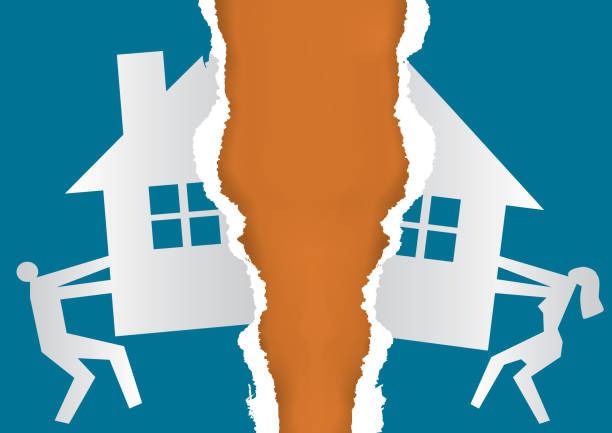
Decisions need to be made regarding what will happen to the house and the debt owed to the bank, as well as each party’s responsibilities under the mortgage agreement.
Generally, there are three main options: selling the property; one party keeping the house and taking over the mortgage; or keeping the mortgage in both names for a set period. The original article categorises these options into three main solutions.
Generally, there are three main options: selling the property; one party keeping the house and taking over the mortgage; or keeping the mortgage in both names for a set period. The original article categorises these options into three main solutions.
Divorce and Mortgage: What should be done with the house and the loan?
If the house is a jointly owned asset and the mortgage is in both partners' names, there are three possible solutions if the couple divorces:
1. Sell the house and repay the mortgage.
The first solution is to sell the property. In this scenario, neither party keeps the house and the proceeds from the sale are used to repay the mortgage to the bank.
Once the debt has been settled, any remaining amount should be divided between the parties according to the applicable marital property regime and the agreement reached by both parties.
This is the simplest solution when neither former spouse is interested in or able to afford to keep the house. It may also be the fairest option when an agreement on who should remain in the property cannot be reached.
Nevertheless, it is important to bear in mind that if the sale generates capital gains, these must be declared for income tax purposes. Therefore, before proceeding, it is advisable to understand the tax implications of the transaction.
2. One party keeps the property and the mortgage, with the other party being released from the loan.
Another possibility is for one party to keep the property and take on the mortgage repayments. However, this decision does not depend solely on the couple’s wishes.
Even if both parties agree, the bank must still assess and authorise the release of the other party from the mortgage agreement. This means that the bank will evaluate whether the person wishing to keep the loan has the financial capacity to pay the monthly instalment alone.
In the event of divorce, legal separation, dissolution of a civil partnership, or the death of one of the spouses, the law states that the bank cannot worsen the mortgage conditions by increasing the spread, provided the loan remains in the name of a consumer with a debt-to-income ratio of less than 55% (or 60% if there are two or more dependants).
Despite this legal protection, the bank may refuse to release one of the parties if it concludes that the new sole borrower does not have the financial means to take on the mortgage alone. After all, once one party leaves the agreement, responsibility for payment falls solely on one person.
Article 25:
Renegotiation of the Credit Agreement
[...]
2. Lenders may not increase the charges associated with credit intended to finance the acquisition, carrying out works, or maintaining property rights over a permanent primary residence by increasing the agreed spreads in the event of renegotiation motivated by any of the following situations:
[...]
(b) subsequent divorce, legal separation of persons and property, dissolution of a civil partnership, or the death of one of the spouses, provided that the loan remains in the name of a consumer who can prove that their household income results in a debt-to-income ratio of less than 55% (or less than 60% for households with two or more dependants).
What is a buyout payment?
If one party keeps the house, they will usually have to compensate the other party financially. This compensation is commonly referred to as a 'buyout payment'.
Put simply, the buyout payment is the amount that the person keeping the property must pay the other party, taking into account the house's value and the outstanding mortgage amount.
This is usually calculated by subtracting the current value of the property from the amount still owed to the bank. This sum is then divided between the two parties.
Practical example: Imagine a couple owns a house valued at €240,000, with an outstanding mortgage of €140,000.
In this case, the difference between the property's value and the debt is €100,000. Therefore, if one party wishes to keep the house and take over the mortgage, they would typically need to pay the other party €50,000, unless otherwise agreed.
Of course, the person keeping the property may not always have the funds available immediately to pay this amount. In such cases, alternatives may be considered, such as paying in instalments, compensating the other party with other jointly owned assets, or obtaining additional financing.
3. Keeping the mortgage in both names
The third option is to leave everything as it is, at least temporarily. In other words, even after the divorce, the mortgage remains in both borrowers' names.
This solution may be appropriate if the couple does not wish to sell the house yet, or if one party continues to live in the property but does not have the financial means to take over the mortgage alone yet.
However, this option requires a high level of trust and organisation between the two parties. As long as both parties remain on the mortgage agreement, they will both continue to be responsible to the bank. This means that if one party stops paying, the other may be required to assume the debt.
For this reason, this solution should preferably be seen as temporary. It could be useful when preparing to sell the house, while awaiting a decision on the division of assets or while negotiating the release of one of the mortgage holders.
Before deciding, it is essential to do the maths.
Regardless of the solution chosen, it is essential to analyse all financial, legal, and tax implications.
Before making a decision, the couple should confirm the outstanding debt, assess the property's current market value, consider any potential capital gains, analyse the debt-to-income ratio of the person who wishes to keep the house and speak to the bank about the possible conditions.
They should also seek legal and financial advice, especially if there are children, other jointly owned assets, disagreement between the parties or difficulties meeting the mortgage payments.
Conclusion:Before deciding, it is essential to do the maths.
Regardless of the solution chosen, it is essential to analyse all financial, legal, and tax implications.
Before making a decision, the couple should confirm the outstanding debt, assess the property's current market value, consider any potential capital gains, analyse the debt-to-income ratio of the person who wishes to keep the house and speak to the bank about the possible conditions.
They should also seek legal and financial advice, especially if there are children, other jointly owned assets, disagreement between the parties or difficulties meeting the mortgage payments.
Final note:
When a couple with a joint mortgage divorces, the decision regarding the house should be made with caution. Possible solutions include selling the property, transferring the mortgage to one party or keeping the loan in both names, but each one has different consequences.
The most important thing is to ensure that the decision protects both parties and prevents future issues.
More articles